
The Central Crime Branch (CCB) in Chennai conducted simultaneous searches at five premises as part of an expanded probe into a corruption case against former DMK School Education Minister Anbil Mahesh Poyyamozhi. The searches, which followed an FIR registered on September 16, 2026, led to the seizure of a laptop and 44 documents related to alleged financial irregularities.

The Central Crime Branch (CCB) in Chennai conducted simultaneous searches at five premises as part of an expanded probe into a corruption case against former DMK School Education Minister Anbil Mahesh Poyyamozhi. The searches, which followed an FIR registered on September 16, 2026, led to the seizure of a laptop and 44 documents related to alleged financial irregularities.

The Central Crime Branch (CCB) in Chennai conducted simultaneous searches at five premises as part of an expanded probe into a corruption case against former DMK School Education Minister Anbil Mahesh Poyyamozhi. The searches, which followed an FIR registered on September 16, 2026, led to the seizure of a laptop and 44 documents related to alleged financial irregularities.

The BJP has accused the Congress of spreading "fake news" regarding UPI transaction charges, asserting that the government has clarified that consumers will not be levied merchant discount rate (MDR) charges. This comes after the Congress criticised a government notification, alleging it paves the way for imposing fees on UPI transactions. The BJP has strongly refuted these claims, highlighting that most UPI transactions remain free and the government provides incentives to maintain a charge-free ecosystem for users.

The Finance Ministry has dismissed allegations of US pressure influencing the 0.4% Merchant Discount Rate (MDR) on select UPI transactions. It clarified that NPCI guidelines prioritise RuPay credit cards on UPI and do not favour international cards. The ministry also asserted that the MDR, applicable to person-to-merchant transactions above Rs 2,000, is unlikely to increase cash transactions or cause inflation, with measures in place to prevent burdening consumers.

The Indian government has introduced a 0.4% fee on UPI transfers above Rs 2,000 made to merchants, effective October 15, ending nearly six years of free merchant payments. This move led to initial rallies in fintech stocks like Paytm and Mobikwik, though some later pared gains. Person-to-person transactions and small payments remain free for customers, with the fee being a Merchant Discount Rate (MDR).

Opposition MPs have voiced strong criticism against the government's new fee on UPI payments exceeding Rs 2,000 to merchants, calling it "anti-people" and expressing widespread "outrage". The issue was raised in a Parliamentary Standing Committee meeting, where concerns were also flagged regarding the methodology of GDP growth calculation and the government's stance on Virtual Digital Assets.

A new Merchant Discount Rate (MDR) on UPI transactions above Rs 2,000, effective October 15, could force small merchants and price-sensitive consumers to revert to cash, according to economic think tank GTRI. The move, which introduces a 0.4 per cent MDR with a Rs 300 cap and concessional rates for specific categories, is questioned by GTRI founder Ajay Srivastava, who suggests it's not a revenue issue for the government but potentially a response to US pressure regarding UPI and RuPay's preferential market position.

Finance Minister Nirmala Sitharaman has urged the Reserve Bank of India to accelerate its central bank digital currency initiatives, emphasising the need to sharpen capabilities with the digital rupee amidst rapid advancements in tokenisation, agentic AI, and quantum computing. She also highlighted critical concerns regarding cybersecurity, warning that autonomous AI systems are evolving rapidly and require robust safeguards. Sitharaman proposed a federated industry platform to give India's technology ecosystem a collective international voice.

State Bank of India (SBI) is developing an innovative solution to assess the creditworthiness of small businesses lacking GST registration by utilising UPI transaction data. This initiative aims to provide end-to-end digital loans within a day, addressing the financial exclusion of many small enterprises.

While opening new accounts, banks can check if the name appears in any mule data. In case it does, the bank can conduct enhanced due diligence.

Credit card transactions in India have surged over 2.6 times between 2021 and 2025, reaching 570 crore volumes and Rs 23.2 lakh crore in value, with private sector banks significantly increasing their market share, according to a recent RBI report.
Fintech giant PhonePe has launched 'PhonePe UPI 123Pay', a new service enabling UPI transactions for feature phone users without requiring an internet connection. This initiative aims to bring digital payment capabilities to over 200 million feature phone users, promoting financial inclusion across India.

If the new MDR regime is rolled out from the middle of this month, as scheduled, it should count as one of the boldest political actions by the Modi government on an economic-policy issue, and a signal that it is less worried about erosion of political capital it draws from one of its key constituencies, notes A K Bhattacharya.

Your credit card may have security controls you rarely use. Here are seven settings that can help prevent unwanted or fraudulent transactions.

Dark patterns are no longer just a consumer protection concern, but a broader macroeconomic challenge affecting the long-term sustainability of India's digital commerce ecosystem.

Bankers said the impact could become more visible from September 29 as customers could withdraw larger amounts of cash, although ATM operations are increasingly managed through third-party cash-loading arrangements.

The Reserve Bank of India (RBI) has proposed a standard operating procedure (SOP) for banks to implement temporary debit holds on accounts or transactions suspected of being involved in money-mule activity and cyber-enabled financial fraud, with a maximum duration of 60 days.
India's Unified Payments Interface (UPI) recorded an unprecedented 24.51 billion transactions valued at Rs 29.8 lakh crore in August, largely propelled by the Raksha Bandhan festival. This surge marks a 22% annual increase in volume and 20% in value, highlighting the expanding reach and depth of the UPI ecosystem. Experts anticipate further growth during the upcoming festive season, while UPI's international acceptance now spans 11 countries.

Customers will qualify for compensation even if they mistakenly share the OTP.

Digital money is gradually starting to behave like software. It's no longer inert -- sitting passively in accounts. In the not-so-distant future, your money could become 'smart' and 'active,' understanding your preferences, paying your bills automatically, optimising your returns, and managing your risks -- all without you having to manage the details.

Jammu and Kashmir Chief Minister Omar Abdullah has expressed support for the Centre's decision to levy charges on UPI transactions, citing the cost of maintaining the digital payment infrastructure. However, he emphasised the need to protect retail consumers from these fees. Abdullah also discussed the upcoming seven-day Assembly session, highlighting the government's commitment to smooth functioning and addressing MLAs' concerns, and touched upon efforts to tackle drainage issues affecting water bodies.

'We see a lot of cases of bank deposits getting lost, especially when people die, so this will help address that because you have one consolidated view.'

The Congress party has strongly refuted claims by Parliamentary Standing Committee on Finance Chairperson Bhartruhari Mahtab that opposition MPs supported levying a Merchant Discount Rate (MDR) on UPI transactions. Congress MP Manish Tewari termed Mahtab's remarks "erroneous and fallacious," clarifying that the committee's recommendation was to "explore" revenue models, not to implement MDR. The party accused Mahtab of misleading due to his recent switch to the BJP.

Telangana police have arrested two individuals from Andhra Pradesh in connection with a large-scale cryptocurrency investment fraud. The accused allegedly operated a Ponzi scheme through a fake website, cheating around 500 victims of over Rs 10 crore by promising to double investments and offering commissions for recruiting new members.

'UPI has been free since Covid, so why is the government charging us now?'

Apple Pay is now available in India. Here's how you can add an eligible credit card to Apple Wallet and make payments using your iPhone.
Former Haryana Chief Minister Bhupinder Singh Hooda has criticised the newly introduced fees on UPI payments, stating they will lead to increased inflation for the common man. He dismissed government claims that customers would not be burdened, arguing that merchants would pass on the costs. Hooda demanded the immediate withdrawal of these fees, highlighting that the government's move contradicts its 'Digital India' initiative.

The finance ministry has announced that all banks, including Regional Rural Banks, will remain open on Sunday, September 27, 2026, to ensure public convenience amidst a proposed three-day strike by the United Forum of Bank Unions (UFBU) starting September 28, 2026. The strike, if it materialises, seeks a 5-day banking week and pension reforms.
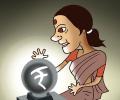
Unified Payments Interface (UPI) has reached a record Rs 314 lakh crore in transaction value in FY26, representing more than a 4,000-fold increase since inception.

The Reserve Bank of India (RBI) has introduced new features for India's digital payment ecosystem, including UPI tap-to-pay for PIN-less transactions up to 5,000 and multi-currency capabilities for forex on Bharat Connect, supporting Euro, British Pound, and other major currencies.
India's UPI system continues its rapid growth, dominating retail payments. Recent amendments to the Payment and Settlement Systems Act allow for targeted Merchant Discount Rates (MDR) on high-value merchant transactions, aiming to create a self-sustaining revenue model for the ecosystem while keeping P2P and low-value payments free. This move could generate significant revenue and encourage ecosystem participation.

India's markets regulator Sebi has launched 'Demat 2.0', a pilot project for tokenisation of corporate bonds, enabling atomic settlement through integration with RBI's wholesale CBDC. This new market infrastructure uses Distributed Ledger Technology (DLT) to make bond issuance, trading, and settlement faster and more efficient. India is the first country to issue corporate bonds natively on a distributed ledger with central bank digital currency settlement. Additionally, RBI Governor announced new UPI innovations: 'Tap & Pay' for faster POS transactions and MyUPI, an AI-powered customer support solution.

Bhubaneswar police have busted a fraudulent digital escort service racket, arresting four individuals for allegedly misusing women's photographs on social media and cheating customers through online payments. The investigation, initiated by a woman's complaint, led to the seizure of digital evidence and a public advisory against such scams.
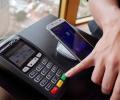
The Indian government has confirmed there will be no rollback of the 0.4 per cent Merchant Discount Rate (MDR) charges on Unified Payments Interface (UPI) transactions exceeding Rs 2,000, effective from October 15. Despite opposition, officials state the decision aims to make the UPI ecosystem self-sustainable and secure, with charges applying only to merchant payments, not person-to-person transactions.

The Indian government has challenged Congress leader Rahul Gandhi's criticism of levying fees on UPI payments above Rs 2,000 to merchants. The government highlighted that a parliamentary standing committee, which included Congress MPs, had previously backed a tiered Merchant Discount Rate (MDR) framework for UPI. This move aims to ensure the financial sustainability of the UPI ecosystem and reduce its dependence on government subsidies, a concern raised by the committee due to the significant funding gap between allocations and operational costs.

The Indian government has introduced a 0.4% Merchant Discount Rate (MDR) on UPI person-to-merchant (P2M) transactions exceeding Rs 2,000, effective October 15. This move ends nearly six years of fully free UPI payments, though person-to-person (P2P) transfers and small P2M payments remain free. The charges aim to bolster investment in UPI infrastructure, with specific exemptions and caps for essential sectors.

The challenge for India lies in navigating complex landscape to its best advantage. The BRICS Summit will test its navigation skills, asserts former foreign secretary Shyam Saran.

The Congress party has strongly criticised the Modi government's decision to introduce a 0.4% Merchant Discount Rate (MDR) on UPI transactions over Rs 2,000, alleging it is a result of US pressure to benefit American card companies. The party also linked this move to broader US actions against India, including tariffs and H-1B visa issues, coining the term "Narendra's Ongoing Trump Appeasement." The government, however, clarified that consumers will not bear the charge, which applies only to merchants.
CPI(ML) Liberation general secretary Dipankar Bhattacharya has strongly criticised the newly introduced Merchant Discount Rate (MDR) on select UPI transactions, labelling it a "UPI tax" and demanding its immediate rollback. He drew parallels with demonetisation, arguing that the new framework would negatively impact small shopkeepers, MSMEs, and ordinary citizens by increasing prices.
